Commercial Security Camera & Access Control Technical FAQ |
Omaha & Nebraska
Welcome to the authoritative technical resource for Commercial Security Camera and Access Control systems. This comprehensive guide provides expert troubleshooting tips, detailed technical specifications, and in-depth answers to common issues faced by commercial clients. Use this page for quick reference on VMS networking, panel maintenance, system integration, and regulatory compliance.

Commercial Security Camera Questions: NVR, 4K, NDAA & Retention
NVR (Network Video Recorder) systems use IP cameras connected over standard ethernet or WiFi, which enables 4K resolution, AI video analytics, and easy remote access. DVR (Digital Video Recorder) systems use older analog coaxial cameras with lower resolution, limited analytics, and difficulty scaling.For any new commercial installation in 2025 and beyond, we recommend NVR systems for three reasons. First, the long-term ROI is better because of superior image quality and AI capability. Second, NVR infrastructure scales without replacing core hardware, so you add cameras and locations as your needs grow. Third, NVR systems support NDAA compliance, which many commercial clients now require, especially government contractors and healthcare facilities.DVR systems are only worth considering when you are upgrading legacy analog infrastructure and complete rewiring is too expensive to justify.
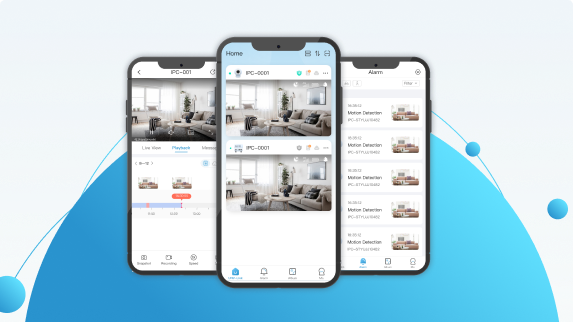
Secure remote access runs through the manufacturer's official encrypted client app, such as LTS Connect or EZView, never through consumer apps or unsecured browser streams. We configure a P2P cloud relay connection that removes the need for port forwarding entirely, which eliminates the most common network vulnerability in DIY security setups.Only authenticated users with registered credentials can view your stream. We set up role-based access during installation: owners get full system access, managers get view-only or limited access, and temporary users can be granted time-limited credentials. Every login is logged.For multi-site operators, the platform pulls every camera feed across all locations into one mobile app.
For general commercial liability and forensic investigation, we recommend a minimum of 30 days of continuous recording. Retention needs vary by industry and situation.Retail and hospitality properties typically need 30 to 60 days to support slip-and-fall claims and inventory shrinkage investigations. Properties in regulated industries, such as financial services, healthcare, and government-contracted facilities, may be required to retain footage for 90 days or longer under specific compliance frameworks. High-traffic areas like lobbies, parking structures, and loading docks warrant longer retention regardless of industry.We calculate your exact storage requirements during the assessment based on camera count, resolution, frame rate, and compression format.
NDAA compliance refers to Section 889 of the National Defense Authorization Act, which prohibits video surveillance equipment made by specific Chinese companies, primarily Hikvision, Dahua, and their subsidiaries, in federal facilities and by federal contractors.For commercial properties in Nebraska and Iowa, NDAA compliance matters beyond government contracts. Many enterprise clients, healthcare systems, financial institutions, and publicly-funded organizations now require NDAA-compliant equipment from their vendors and tenants as a data security policy. Non-compliant cameras have also been subject to documented cybersecurity vulnerabilities.At Omaha Security Cameras, we install NDAA-compliant camera systems exclusively, which protects our clients from regulatory liability and future compliance requirements.
Commercial security camera installation costs depend on camera count, camera type, building layout, cabling requirements, and whether access control is included. For general budgeting:A small installation of 4 to 8 cameras with an NVR typically runs $3,000 to $6,000 installed. A mid-size system of 8 to 16 cameras with access control on 1 to 2 doors runs $6,000 to $12,000. Large enterprise or multi-building deployments are scoped individually.These ranges reflect professional-grade NDAA-compliant equipment and certified installation. Monthly fees are optional and only apply if you choose cloud storage or remote monitoring. On-premise NVR systems have no recurring fees.We provide itemized proposals with no hidden costs. Call 402-915-1672 or request a free assessment online.
4K cameras capture footage at 3840x2160 pixels, four times the resolution of 1080P. For commercial security, the practical difference is how much useful detail you can pull from recorded footage, especially in large open areas.With 4K, you can digitally zoom into a section of recorded footage and still identify faces, license plates, and other forensic details that would be blurred beyond recognition in 1080P. That matters for parking lots, building entrances, loading docks, and any area covering more than 30 feet of distance.Our standard commercial recommendation is 4K for all exterior and large interior spaces, with 1080P or 4MP cameras used selectively for close-range interior coverage where the cost difference matters.
Commercial Access Control Questions: Cloud, Mobile &
Multi-Tenant
Yes. Modern open-platform access control systems are built to communicate with existing security alarm panels, fire alarm systems, and video surveillance cameras through standard integration protocols.At Omaha Security Cameras, we specialize in integrated security where your access control, cameras, and alarm systems share event data in real time. A door-forced-open event triggers both an alarm response and an automatic camera recording of that entry point. An after-hours access attempt immediately surfaces live camera footage on your monitoring dashboard. A fire alarm can automatically unlock all egress doors for safe evacuation.We evaluate your existing alarm infrastructure during the assessment to confirm compatibility before installation.
For multi-tenant commercial buildings and apartment communities across Omaha and Lincoln, we recommend a cloud-based video intercom at the main building entrance combined with smart credential-based access control on interior common areas and individual suite doors.The video intercom lets tenants visually verify visitors and grant remote entry from their smartphone. The interior access control gives property managers one platform to add and revoke tenant credentials instantly when leases change, with no rekeying. For large multi-building portfolios, the whole system runs on one cloud dashboard: one login to manage every building, every door, and every tenant credential.Detailed audit trails show exactly who accessed which door and when.
Yes. Most commercial access control systems support electric strikes, magnetic locks, and wireless locks on standard door frames without requiring full hardware replacement.During the site assessment, we evaluate your existing door hardware, frame type, and power infrastructure to confirm compatibility and find the cleanest integration path. In most cases, existing door closers, frames, and locking hardware can be kept. We specify the correct interface hardware, including power supplies, request-to-exit devices, and door position sensors, so every door in your system operates reliably and meets local egress code.
When an employee is terminated or a tenant vacates, their credential is deactivated in the management dashboard in seconds, from any device, anywhere. No locksmith call, no rekeying cost, and no window of vulnerability between the time someone leaves and the time a physical key gets recovered. The deactivation is immediate and logged.For businesses with high turnover, such as retail, hospitality, healthcare, and property management, this removes a persistent and often overlooked security liability. For properties with access-audit compliance requirements, every deactivation event is timestamped and stored in the system log.We set up credential lifecycle workflows during installation so your HR or operations team can manage this independently.
Cloud-based access control stores your system configuration, user credentials, and audit logs on secure remote servers, so you can manage every door at every location from any device without being on site. Software updates happen automatically, and there is no local server to maintain or replace.On-premise access control keeps everything on a local controller at your facility and operates independently of internet connectivity, which matters for facilities with strict data governance requirements.For most commercial properties in Omaha and across Nebraska, we recommend cloud-based systems for one decisive reason: operational flexibility. When a key employee leaves at 5 PM on a Friday, you can revoke their credential from your phone in seconds. For multi-site property managers, cloud is the only practical choice.
Yes. Every on-premise NVR system we install records continuously with no monthly subscription and no recurring fees. Footage is stored locally on your own recorder, which you own outright after installation. Cloud storage and remote monitoring are available if you want them, but they are optional add-ons, not a requirement. Many commercial camera systems sold today lock you into per-camera monthly fees for basic recording. Ours do not. You own the hardware, you own the footage, and 24/7 recording works with zero ongoing cost.
Business Security Questions:
Cost, ROI & Liability
Integration between security cameras and access control creates one unified platform where every physical access event is paired with video verification. When a door access attempt happens, successful or denied, the system automatically surfaces the camera view for that entry point, either as a live feed or a timestamped clip.Your security team does not have to search through hours of footage to find what happened at a specific door. The access log is clickable, so every event links directly to its video. Advanced integrations trigger automated responses: an after-hours access denial sends a mobile alert with a live camera snapshot.This closed-loop approach turns reactive security into active management for commercial clients across Nebraska and Iowa.
The primary investment in a commercial security system is the one-time hardware and professional installation cost. For most commercial properties in Omaha and Lincoln, ongoing monthly fees are optional.On-premise NVR systems with local storage have zero recurring fees after installation. Cloud video storage, if you choose it, typically runs $10 to $30 per camera per month depending on retention length and resolution. Cloud access control management is generally billed per door per month.We outline every potential cost in writing before any proposal is signed. There are no activation fees, no mandatory service contracts on hardware-only installations, and no surprise charges. The goal is a security system you own and control, not a subscription you are locked into.
When evaluating commercial security installers in Omaha and across Nebraska, focus on four things.First, years of commercial experience specifically, not residential. Commercial security involves different infrastructure, compliance requirements, and client accountability than home systems. Ask for commercial references and case studies. Second, manufacturer certifications. Professional integrators hold certifications from the camera and access control manufacturers they install. Third, the post-installation support model. Local support versus a national call center makes a real difference in response time. Fourth, NDAA compliance. Any installer putting non-compliant equipment in your building is creating future liability.Omaha Security Cameras has operated commercially since 1998, holds manufacturer certifications, provides local Omaha-based support, and installs NDAA-compliant equipment exclusively.
Security systems play a direct role in limiting liability exposure for commercial property owners across Nebraska and Iowa. Continuous video recording with accurate timestamps provides verifiable evidence for slip-and-fall claims, property damage disputes, workplace incident investigations, and wrongful termination allegations. Without recorded footage, these disputes are hard to resolve. With footage, many claims are dismissed before reaching litigation.Access control audit trails document exactly who was in a specific area at a specific time, which is critical for investigating internal theft or unauthorized access. Many commercial insurance carriers in Nebraska now offer premium reductions for properties with documented surveillance and access control.We can provide documentation of your system specifications for insurance purposes on request.
Return on investment for commercial security systems comes from several directions at once. The most direct drivers are reduced theft and vandalism losses, insurance premium reductions from carriers who credit documented surveillance, and liability claim deflection, where clear video evidence stops fraudulent claims from advancing.Operational ROI matters more and more for property managers: unified remote monitoring across multiple sites reduces the need for on-site security personnel, AI surveillance cuts false alarm response costs, and access control eliminates locksmith calls and rekeying on every staff or tenant turnover.We build itemized ROI projections for ownership presentations on request, based on your specific property type, location, and operational profile.
Omaha Security Cameras installs NDAA-compliant commercial security systems exclusively across Nebraska and Iowa. Every camera and recorder we deploy meets Section 889 requirements, so your system stays clear of the equipment banned for federal facilities and federal contractors. For businesses that hold government contracts, work in healthcare or financial services, or expect to face compliance requirements down the road, buying NDAA-compliant from the start avoids a costly rip-and-replace later. We handle sourcing, installation, and documentation of compliance for your records. Call 402-915-1672 or request a free assessment.
HOW TO VIDEOS






Essential Security Industry Updates





Watch Our YouTube Channel for Security Tips and Tutorials
Stay ahead of security risks with our comprehensive library of quick tips, technical tutorials, and product demonstrations featuring the systems we install, including LTS, Uniview, and access control solutions. Subscribe to see new content on firmware updates, remote viewing setup, best practices for managing your NVR, and troubleshooting guides to keep your business safe and secure.